

Understanding Injection Medicine for Weight Loss: How They Work
To understand why injection medicine for weight loss is so effective, we have to look at the hormones our bodies naturally produce. When we eat, our gut releases hormones that tell our brain, “Hey, we’re full!” and tell our pancreas to manage blood sugar.
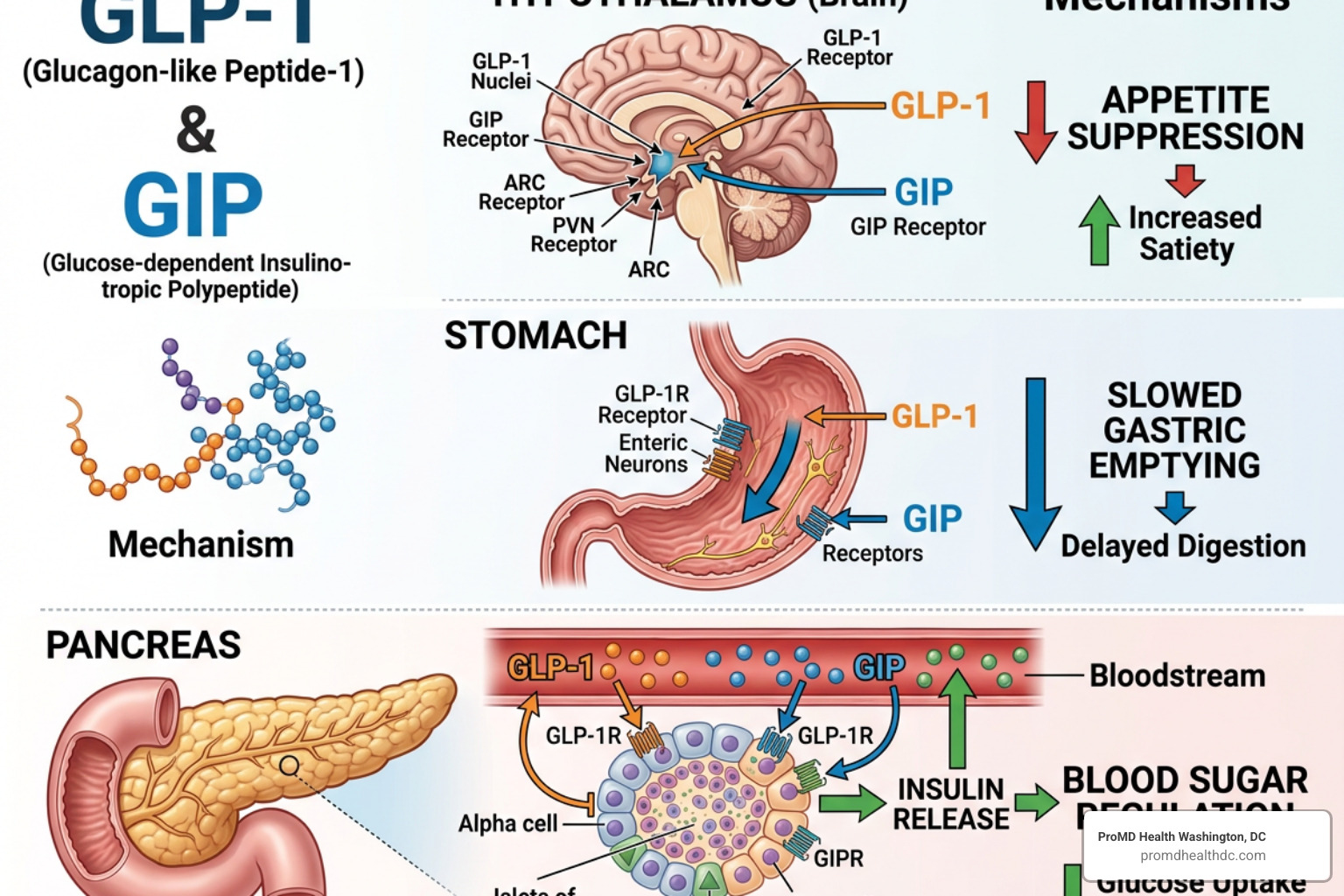
The most famous of these is GLP-1 (glucagon-like peptide-1). Most modern weight loss injections are GLP-1 receptor agonists. This is a fancy medical way of saying they “mimic” the natural GLP-1 hormone, but they stay in your system much longer than the version your body makes.
These medications work through three primary channels:
- The Brain: They target the hunger centers in the hypothalamus, decreasing “food noise” (those constant intrusive thoughts about your next meal) and increasing feelings of satiety.
- The Stomach: They slow down “gastric emptying.” This means food stays in your stomach longer, making you feel physically full for a greater period after eating.
- The Pancreas: They stimulate insulin production and lower glucagon levels, which helps stabilize blood sugar.
Some newer medications, like tirzepatide, also target GIP (glucose-dependent insulinotropic polypeptide). While GLP-1 focuses heavily on satiety and the gut, GIP may play a larger role in how the body breaks down fat and uses energy. By hitting both receptors, these “dual agonists” often produce even more significant weight loss results. According to scientific research on semaglutide, these mechanisms represent a massive leap forward from older, stimulant-based diet pills.
Top FDA-Approved Weight Loss Injectables
The landscape of injection medicine for weight loss has expanded rapidly. While many people use the name “Ozempic” as a catch-all term, it is actually only FDA-approved for Type 2 diabetes. For chronic weight management, there are specific brands and formulations that have undergone rigorous clinical trials specifically for patients with obesity.
Wegovy: A Leading Injection Medicine for Weight Loss
Wegovy was the “breakthrough” drug that changed the conversation in 2021. Its active ingredient is semaglutide, the same molecule found in Ozempic, but Wegovy is available in higher doses (up to 2.4 mg) specifically for weight loss.
In the landmark STEP 1 clinical trial, participants taking Wegovy lost an average of 14.9% of their body weight over 68 weeks, compared to just 2.4% in the placebo group. For someone starting at 250 pounds, that is a life-changing loss of roughly 37 pounds. It is administered as a simple once-weekly subcutaneous injection.
Zepbound: The Newest Injection Medicine for Weight Loss
Approved in late 2023, Zepbound (active ingredient tirzepatide) is currently the “heavy hitter” in the market. As a dual GLP-1 and GIP receptor agonist, it tackles hunger from two different angles.
The results from the SURMOUNT-1 trial were staggering: participants on the highest dose achieved an average of 22.5% body weight reduction at 72 weeks. This level of weight loss begins to rival the results previously only seen with bariatric surgery. Like Wegovy, it is a once-weekly injection.
Saxenda and Imcivree
Before the weekly shots took over, Saxenda (liraglutide) was the primary injectable option. It is a daily injection that yields about an 8% average weight loss. While it requires more frequent dosing, it remains a valuable tool for those who may not tolerate the newer weekly medications.
Imcivree (setmelanotide) is a highly specialized medication. It isn’t for general weight loss; instead, it targets the MC4R pathway in people with rare genetic forms of obesity (such as POMC, PCSK1, or LEPR deficiency). It helps “fix” a broken signaling pathway in the brain that causes insatiable hunger.

Eligibility, Administration, and Safety Precautions
Not everyone is a candidate for injection medicine for weight loss. The FDA has established clear BMI (Body Mass Index) criteria for these prescriptions:
- A BMI of 30 or higher (obesity).
- A BMI of 27 or higher (overweight) plus at least one weight-related health condition, such as high blood pressure, Type 2 diabetes, or high cholesterol.
At ProMD Health Washington, DC, we believe in a personalized approach. We often use tools like the Entity Med AI Simulator to help patients visualize their potential results and discuss their specific health history.
How to Administer the Medication
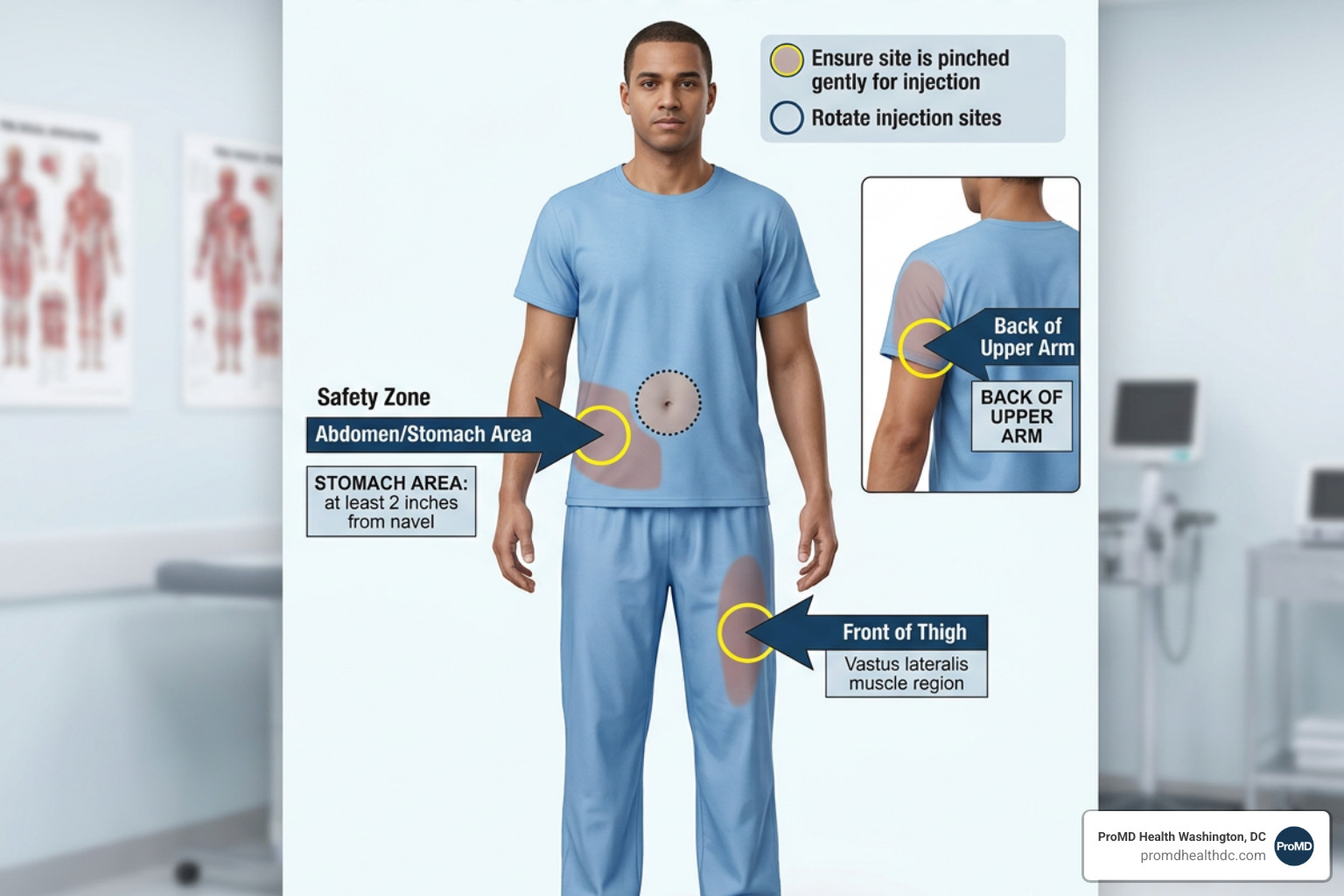
These drugs are injected “subcutaneously,” meaning just under the skin into the fatty tissue. Common sites include the stomach (at least 2 inches from the navel), the front of the thigh, or the back of the upper arm.
We always recommend a “start low and go slow” titration schedule. For example, semaglutide usually starts at 0.25 mg for four weeks before gradually increasing. This helps your body adjust and minimizes side effects. It is also vital to rotate your injection site each week to prevent skin issues. You can find more info about weight loss injections and proper technique on our dedicated service page.
| Feature | Wegovy (Semaglutide) | Zepbound (Tirzepatide) | Saxenda (Liraglutide) |
|---|---|---|---|
| Frequency | Weekly | Weekly | Daily |
| Mechanism | GLP-1 only | GLP-1 & GIP | GLP-1 only |
| Max Weight Loss | ~15% | ~22.5% | ~8% |
| Administration | Single-use pen | Single-use pen | Multi-dose pen |
Common Side Effects and Serious Risks
Because these medications affect the digestive system, gastrointestinal issues are the most common complaints. Most patients experience some level of:
- Nausea (especially after a dose increase)
- Vomiting or diarrhea
- Constipation
- Heartburn or stomach pain
However, there are serious risks to discuss with your provider. All GLP-1 medications carry a “Boxed Warning” regarding thyroid C-cell tumors. While this has primarily been seen in rodent studies, it is a significant precaution. Other serious but rare risks include pancreatitis (inflammation of the pancreas), gallbladder problems (like gallstones), and kidney issues due to dehydration from vomiting.
Who Should Avoid These Medications?
You should not use these medications if you have:
- A personal or family history of Medullary Thyroid Carcinoma (MTC).
- Multiple Endocrine Neoplasia syndrome type 2 (MEN 2).
- A history of severe allergic reactions to the ingredients.
- Current pregnancy or plans to become pregnant (it is recommended to stop these drugs 2 months before trying to conceive).
The Risks of Compounded and Counterfeit Medications
With the massive surge in popularity, there have been frequent shortages of brand-name Wegovy and Zepbound. This has led to an explosion of “compounded” semaglutide and tirzepatide.
It is important to understand that compounded medications are not FDA-approved. While compounding pharmacies are allowed to make versions of drugs during official shortages, the FDA has expressed significant concerns on unapproved GLP-1 drugs.
The risks include:
- Incorrect Ingredients: Some “gray market” sellers use salt forms of the active ingredient (like semaglutide sodium) which have not been tested for safety or efficacy.
- Dosage Errors: The FDA has received reports of adverse events where patients accidentally injected much higher doses than intended because of confusing packaging or syringes.
- Contamination: Unlike the sterile, strictly regulated manufacturing plants of major pharmaceutical companies, smaller compounding labs may have varying levels of quality control.
We strongly advise our patients in Washington, DC, and Montgomery County to avoid buying “cheap Ozempic” online. If a deal seems too good to be true, it likely is—and your health is too valuable to gamble with unverified chemicals.
Future Outlook and Frequently Asked Questions
The world of injection medicine for weight loss isn’t slowing down. Researchers are currently testing “triple agonists” like retatrutide, which targets GLP-1, GIP, and glucagon receptors. Early trials (TRIUMPH-4) have shown weight loss of up to 28.7% over 68 weeks.
Another exciting prospect is MariTide, a long-acting injection that may only need to be administered once a month. You can stay updated on these breakthroughs through research on pipeline drugs.
What happens if you stop taking weight loss injections?
This is a major concern for many. Because obesity is a chronic metabolic condition, stopping the medication often leads to weight regain. Your body’s “metabolic adaptation” kicks in—hunger hormones increase, and your resting metabolic rate may drop. Many providers view these as long-term maintenance medications, similar to how one might take blood pressure medicine indefinitely. To support overall health during this journey, many of our patients also look into more info about B12 shots for energy or more info about hormone therapy to balance their overall wellness.
Are there oral versions of these medications?
Yes, though they are still evolving. There is an oral version of semaglutide (Rybelsus) approved for diabetes, and a high-dose “Wegovy Pill” showed up to 16.6% weight loss in trials. New “small-molecule” drugs like orforglipron are also in development, which may be easier to take since they don’t have the strict fasting requirements of current oral GLP-1s.
How much do weight loss injections cost?
The “sticker price” for these medications can be high—often over $1,000 per month without insurance.
- Insurance: Coverage varies wildly. Some employer plans cover them fully, while others exclude weight loss drugs entirely.
- Medicare: Currently, Medicare does not cover medications for the sole purpose of weight loss, though this is a topic of ongoing legislative debate.
- Manufacturer Programs: Companies like Novo Nordisk and Eli Lilly offer savings cards that can bring the cost down significantly for those with commercial insurance.
Conclusion
The rise of injection medicine for weight loss represents a turning point in how we treat obesity. No longer is weight loss viewed solely as a matter of “eating less and moving more”—we now have the tools to address the underlying hormonal imbalances that make weight loss so difficult for millions.
At ProMD Health Washington, DC, we are dedicated to helping you navigate these options safely. Whether you are visiting us at our office at 1003 K Street NW, Suite 835, Washington, DC, or one of our other locations in Prince George’s or Montgomery County, our goal is to provide a comprehensive wellness plan. By combining these advanced medications with lifestyle changes and personalized aesthetic care, we help you achieve results you can see and feel.
Ready to see what’s possible? More info about weight loss injections is just a click away. Let’s work together to find the best path for your health journey.
