

Why 80 Million Americans Are Turning to Non Invasive Hair Restoration
Non invasive hair restoration is one of the fastest-growing areas in medical aesthetics — and for good reason. Hair loss affects over 80 million Americans, with 85% of men and 55% of women experiencing significant thinning at some point in their lives. And since the pandemic, demand for effective hair loss solutions has surged by 400%.
Here’s a quick look at the most common non-invasive hair restoration options and what they typically cost:
| Treatment | Avg. Cost Per Session | Sessions Needed | Downtime |
|---|---|---|---|
| PRP Hair Restoration | $500 – $1,500 | 3-4 initial, then every 6 months | Minimal |
| PDGF Hair Restoration | $600 – $1,800 | 3-6 sessions | Minimal |
| Microneedling (scalp) | $200 – $700 | 4-6 sessions | 24-48 hours |
| HydraFacial Keravive | $300 – $500 | 3 sessions + monthly | None |
| Nutrafol (supplement) | $80 – $100/month | Ongoing | None |
Costs vary by provider, location, and individual treatment plan.
If you’re noticing your part getting wider, your ponytail feeling thinner, or more hair on your pillow than usual — you’re not alone. And you don’t have to go under a knife to do something about it.
87% of people say the condition of their hair directly affects their confidence. That’s a real, everyday impact. The good news? Today’s non-invasive options — from PRP to scalp-focused facials — can meaningfully slow loss and stimulate regrowth without surgery, scarring, or significant downtime.
At ProMD Health Washington, DC, treatments like PRP Hair Restoration, PDGF, and HydraFacial Keravive are helping patients in the District reclaim thicker, healthier hair on their own terms.
Key terms for non invasive hair restoration:
The Science of non invasive hair restoration vs. Surgery
When we talk about restoring hair, many people immediately picture a surgical “hair transplant.” While surgery has come a long way, it remains an invasive procedure involving incisions, local anesthesia, and a recovery period that often includes swelling and scabbing. In contrast, non invasive hair restoration focuses on biological stimulation rather than physical relocation.
The primary difference lies in how we treat the follicle. Surgery moves follicles from a “donor site” (usually the back of the head) to a “recipient site.” Non-invasive methods, however, aim to “wake up” dormant follicles and extend the Anagen (growth) phase of the hair cycle. This is achieved through a “scarless approach” that utilizes the body’s own regenerative capabilities.
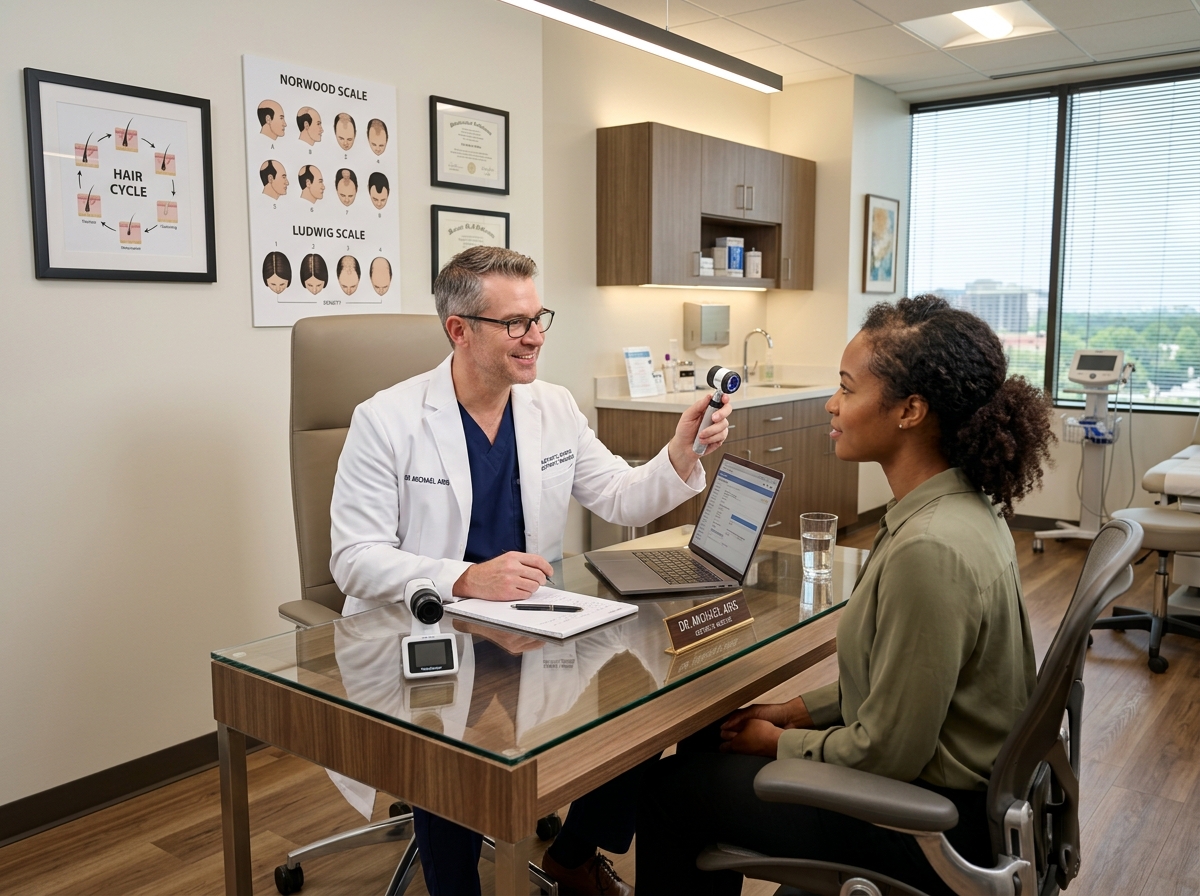
According to Surgical and Non-Surgical Treatments for Hair Loss, the goal of non-surgical therapy is often to inhibit DHT—the hormone responsible for follicle miniaturization—and improve blood circulation to the scalp. By delivering growth factors directly to the root, we can reverse the thinning process. For those in the Washington, DC area looking for a needle-free or minimally invasive way to boost density, you can find more info about hair restoration services at our K Street office.
non invasive hair restoration with PRP and PDGF
One of the most exciting breakthroughs in our field is the use of Platelet-Rich Plasma (PRP) and Platelet-Derived Growth Factors (PDGF).
- PRP (Platelet-Rich Plasma): We draw a small amount of your blood and spin it in a centrifuge to concentrate the platelets. These platelets are “biological gold”—they contain hundreds of specialized growth factors that aid in healing and tissue regeneration. When injected into the scalp, they stimulate the hair follicles to enter the growth phase.
- PDGF (Platelet-Derived Growth Factor): This is a more refined, potent version of growth factor therapy. It targets the specific signals that tell a follicle to start producing a thicker hair shaft.
Research on PRP efficacy shows high patient satisfaction, with many reporting thicker, fuller hair after just a few months. These treatments are essentially “follicle reawakening” sessions that improve overall scalp health and hair density.
Top Treatments for Effective Hair Regrowth
Beyond growth factor injections, we utilize several other modalities to ensure our patients in DC get the best possible results.
- Microneedling: This involves using a device to create thousands of tiny, controlled micro-channels in the scalp. This “micro-trauma” triggers the body’s natural healing response, increasing blood flow and collagen production. Scientific research on microneedling suggests that it can significantly increase hair count, especially when combined with topical treatments. You can explore more info about microneedling services to see how this fits into a broader aesthetic plan.
- HydraFacial Keravive: Think of this as a “facial for your scalp.” It uses patented vortex technology to deeply cleanse, exfoliate, and hydrate the scalp. By removing dead skin cells and clogged follicles, it creates the perfect environment for hair to grow.
- Nutraceuticals (Nutrafol): Topical treatments only go so far. We often recommend Nutrafol, a medical-grade supplement that addresses the root causes of thinning—like stress, hormones, and nutrition—from the inside out. Check out more info about skincare supplements to understand how internal wellness supports external hair growth.
Targeting Specific Hair Loss Conditions
Not all hair loss is created equal. The effectiveness of non invasive hair restoration often depends on the type of alopecia being treated:
- Androgenetic Alopecia (Pattern Baldness): This is the most common cause. Non-invasive treatments work by blocking DHT and nourishing the shrinking follicles.
- Alopecia Areata: This is an autoimmune condition. While more complex, steroid injections or PRP can sometimes help 60-70% of cases show reduced loss.
- Telogen Effluvium: Often triggered by stress or illness (common post-pandemic), this is a temporary shedding that responds very well to the nutrient boost of Keravive and PRP.
- Traction Alopecia: Caused by tight hairstyles. If caught early, non-invasive methods can restore density before the follicles permanently scar over.
Advanced Approaches in Non-Invasive Hair Restoration
At ProMD Health, we don’t believe in a one-size-fits-all approach. We leverage technology to deliver personalized results. For example, we use the Entity Med AI Simulator at our Washington, DC clinic. This allow us to help patients preview potential aesthetic outcomes, making the decision-making process much more comfortable.
Our advanced protocols involve:
- Leveraging Natural Growth Factors: Using your own biology (PRP/PDGF) means there is zero risk of allergic reaction.
- Enhanced Nutrient Delivery: By combining microneedling with HydraFacial Keravive, we ensure that growth serums actually reach the follicle rather than just sitting on top of the skin.
- Scalp Health Optimization: A healthy scalp is the “soil” in which your hair grows. We focus on reducing inflammation and increasing vascularity to ensure long-term success.
Comparing Costs of non invasive hair restoration
When comparing non invasive hair restoration to surgery, the “upfront” cost is significantly lower. While a hair transplant in the DC area can range from $8,000 to $20,000+, non-invasive protocols allow you to invest in your hair gradually.
| Treatment | Initial Series (3-6 sessions) | Annual Maintenance | Best For |
|---|---|---|---|
| PRP/PDGF | $1,800 – $4,500 | $1,000 – $2,000 | Thinning, Pattern Loss |
| Microneedling | $1,200 – $3,000 | $600 – $1,200 | Texture, Absorption |
| Keravive | $900 – $1,500 | $1,200 (Monthly/Quarterly) | Scalp Health, Shedding |
| Nutrafol | N/A | $960 – $1,200 | Hormonal/Stress Support |
While these treatments require ongoing maintenance, they offer a “pay-as-you-grow” model that fits many lifestyles. Moreover, there is no “lost time” cost—most patients return to their offices on K Street or Capitol Hill immediately after their appointment.
Ideal Candidates and Realistic Expectations
Who is the perfect candidate for non invasive hair restoration? Generally, these treatments work best for those in the early to moderate stages of hair loss. If a follicle has been completely dead for years (leaving a shiny, smooth bald spot), non-invasive methods may struggle to bring it back. However, if you have “peach fuzz” or visible thinning, there is a high chance of success.
Ideal candidates include:
- Men and women with diffuse thinning.
- Those not ready for the cost or recovery of surgery.
- Patients looking to “protect their investment” after a hair transplant.
- Individuals experiencing stress-related shedding.
Personalized Protocols and Expectation Management
Expectation management is key. You didn’t lose your hair overnight, and you won’t regrow it overnight either. Most patients begin to see a reduction in shedding within weeks, but visible “baby hairs” and increased density typically take 3 to 6 months to appear.
At ProMD Health Washington, DC, our team—including Steele Bolton, RN, and Perla Saliba, FNP-C—works with you to create a timeline. We monitor your progress with standardized photos to ensure the protocol is working. Our specialists, including Jennifer Nicholson, Blair Townsend, and Elvia Cancel, are dedicated to ensuring your experience is comfortable and your results are natural.
Frequently Asked Questions about Hair Restoration
How long do non-invasive results last?
Because non-invasive treatments address the symptoms of hair loss (like DHT and poor circulation) rather than the underlying genetics, maintenance is required. For PRP, we usually recommend a “booster” every 6 to 12 months. Supplements like Nutrafol should be taken daily for continued results.
Are these treatments painful?
Most patients describe PRP as a series of quick pinpricks. We use numbing techniques to ensure the process is as comfortable as possible. HydraFacial Keravive is actually quite relaxing—many patients compare it to a deep scalp massage. Microneedling can feel “prickly,” but is generally well-tolerated.
Can I combine PRP with microneedling?
Absolutely! In fact, we recommend it. Combining modalities often yields superior results. Microneedling creates the channels, and PRP provides the growth factors to fill them. This synergy is the “gold standard” for non-surgical hair restoration.
Conclusion
Investing in your hair is an investment in your confidence. Whether you are dealing with the first signs of a receding hairline or are looking to combat thinning that has bothered you for years, non invasive hair restoration offers a safe, effective, and modern solution.
At ProMD Health Washington, DC, we pride ourselves on being a premier medical aesthetics and wellness clinic. Located at 1003 K Street NW, Suite 835, we serve the heart of the District with cutting-edge treatments. From the expertise of Steele Bolton, RN, and Perla Saliba, FNP-C, to our advanced AI simulators, we are here to help you navigate your hair restoration journey.
Ready to see what’s possible for your tresses? Learn more about our hair restoration services and schedule your consultation today. Let us help you put your best head of hair forward!
