

Hair Restoration for Men: What You Need to Know Before You Start
Hair restoration men is one of the most searched topics in men’s health — and for good reason. By age 50, more than half of white men show visible signs of hair loss. Two-thirds of all men will experience it at some point in their lives.
Here’s a quick overview of your main options:
| Approach | Examples | Best For |
|---|---|---|
| Surgical | FUE, FUT hair transplant | Permanent, significant regrowth |
| Medications | Minoxidil, Finasteride | Slowing loss, mild regrowth |
| Clinical Therapies | PRP, LLLT | Stimulating follicles, early loss |
| Cosmetic Camouflage | Scalp micropigmentation, hair systems | Instant appearance improvement |
Hair loss isn’t just a cosmetic issue. It can quietly chip away at your confidence, affect how you show up at work, and change how you see yourself in the mirror. Many men notice the first signs — a receding hairline, a thinning crown, or that unmistakable M-shape forming at the temples — and aren’t sure where to turn.
The good news? Modern hair restoration has come a long way. Today’s options range from minimally invasive surgical techniques to non-surgical therapies that can slow, stop, or even reverse hair loss — with results that look completely natural.
This guide walks you through everything: what causes hair loss, which treatments actually work, what to expect from the process, and how to choose the right path for your situation.
Understanding the Causes and Patterns of Male Hair Loss
To fix the problem, we first have to understand why it’s happening. While there are several types of hair loss, the heavy hitter is androgenetic alopecia, more commonly known as male pattern baldness.
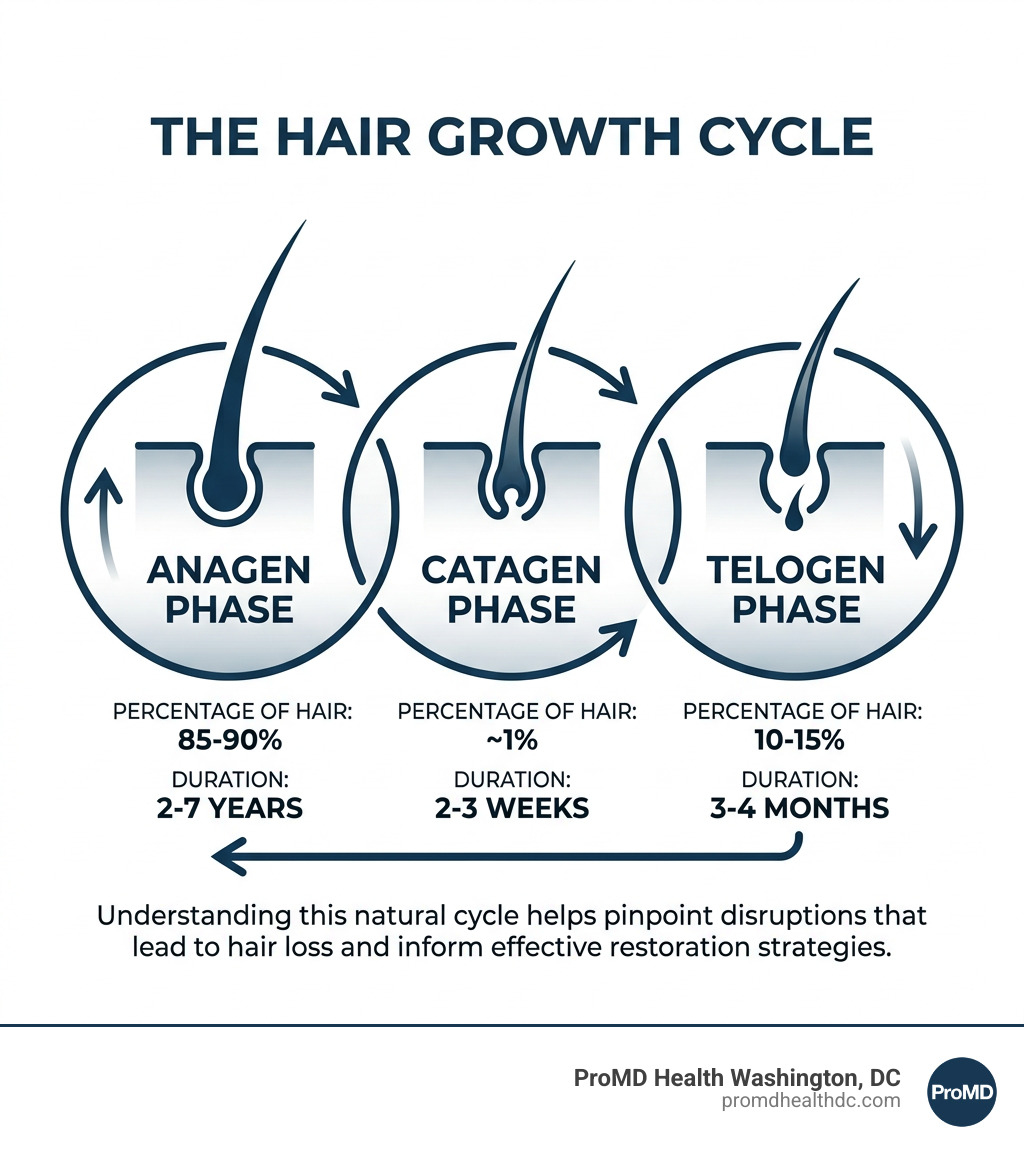
The primary villain in this story is a hormone called dihydrotestosterone (DHT). If you have a genetic sensitivity to DHT, your hair follicles begin a process called “miniaturization.” Essentially, the DHT causes the follicle to shrink over time. The hair it produces becomes thinner, shorter, and more brittle until, eventually, the follicle stops producing hair altogether.
The Hamilton-Norwood Scale
Doctors use the Hamilton-Norwood scale to track how far along the hair loss has progressed. It usually starts with a slight recession at the temples (Stage 1 or 2), moves into a deeper M-shape and thinning at the crown (Stage 3 or 4), and can eventually lead to a horseshoe-shaped ring of hair around the sides and back (Stage 7).
Scientific research on male pattern baldness confirms that while genetics are the biggest factor, other triggers can speed up the process or cause temporary shedding.
Common Hair Loss Triggers
- Heredity: If your father or maternal grandfather was bald, your odds increase significantly.
- Hormonal Shifts: Changes in testosterone levels as we age.
- Stress: Severe emotional or physical stress can trigger “telogen effluvium,” pushing hair into the shedding phase.
- Medications: Certain drugs for blood pressure, heart disease, or depression can have hair loss as a side effect.
- Nutritional Deficiencies: A lack of iron, protein, or certain vitamins can weaken hair health.
Surgical Hair Restoration Men: FUT vs. FUE
If you’re looking for a permanent solution to “fill in the blanks,” surgery is often the most effective route. Modern hair transplants are lightyears ahead of the “hair plugs” of the 1980s. Today, we use micro-grafts to create a hairline that is virtually indistinguishable from the one nature gave you.
The secret lies in “donor dominance.” The hair on the back and sides of your head (the safe donor zone) is genetically programmed to be resistant to DHT. When we move those follicles to the top of your head, they keep that resistance and continue to grow for a lifetime.
Comparing the Two Main Techniques
| Feature | Follicular Unit Transplantation (FUT) | Follicular Unit Extraction (FUE) |
|---|---|---|
| Method | A strip of skin is removed from the donor area. | Individual follicles are extracted one by one. |
| Scarring | Leaves a linear scar (hidden by longer hair). | Tiny, dot-like scars (virtually invisible). |
| Recovery | Slightly longer (10–14 days for stitches). | Faster (usually 5–7 days). |
| Graft Count | Can often harvest more grafts in one session. | Ideal for smaller sessions or short hairstyles. |
Scientific research on hair transplantation techniques highlights that FUE has become the “gold standard” for many men in Washington, DC because it allows for a shorter haircut without worrying about a visible scar.
Effective Non-Surgical Options for Hair Restoration Men
Surgery isn’t the only answer. In fact, many of our patients at ProMD Health prefer to start with non-surgical routes or use them to maintain their surgical results. These treatments focus on waking up “sleeping” follicles and improving the health of the scalp.
One of the most exciting advancements we offer is Platelet-Rich Plasma (PRP) therapy. This involves taking a small sample of your own blood, concentrating the platelets, and injecting them back into the scalp. These platelets are packed with growth factors that stimulate stem cells and promote new blood vessel growth.
Other popular non-surgical options include:
- Low-Level Light Therapy (LLLT): Using medical-grade lasers to stimulate cellular activity.
- Scalp Micropigmentation: A specialized tattooing technique that mimics the look of a buzzed hair follicles to create the illusion of density.
To see the full range of what we do, you can find more info about hair restoration services on our dedicated service page.
Topical and Oral Medications for Hair Restoration Men
Medication is the “baseline” for most hair restoration men plans. There are two FDA-approved heavyweights in this category:
- Minoxidil (Rogaine): This is a topical solution (or foam) applied twice daily. It works by increasing blood flow to the follicles and extending the growth phase of the hair.
- Finasteride (Propecia): This is an oral pill that acts as a 5-alpha reductase inhibitor. In plain English, it blocks the conversion of testosterone into DHT. Studies show it slows hair loss in 80% to 90% of men who take it.
At ProMD Health, we often look at the bigger picture of men’s health. Sometimes, hair thinning is tied to broader hormonal imbalances. For those interested in optimizing their overall wellness, you can find more info about hormone therapy to see how it might complement your hair goals.
Advanced Clinical Therapies for Hair Restoration Men
Beyond the standard pill-and-cream routine, clinical therapies like PRP offer a higher level of intervention. Because PRP uses your own blood, the risk of allergic reaction is zero. It’s a “natural” way to boost hair density by providing the follicles with the nutrients they need to thrive.
Research on PRP for hair loss suggests it is particularly effective for men who are in the early stages of thinning. To further enhance the absorption of topical treatments and stimulate the scalp, we also utilize techniques like microneedling. You can find more info about microneedling and how it can be used for skin and scalp rejuvenation.
The Hair Restoration Journey: Consultation to Recovery
If you’re considering hair restoration men services, it’s important to know that this is a marathon, not a sprint. Whether you choose surgery or clinical therapies, your hair needs time to respond.
The Consultation
The first step is a thorough scalp examination. We look at your hair density, the health of your donor area, and your overall medical history. This is where we set realistic expectations. If you are completely bald, we can’t give you a 1970s rockstar mane, but we can strategically restore your hairline to frame your face.
The Procedure and Recovery
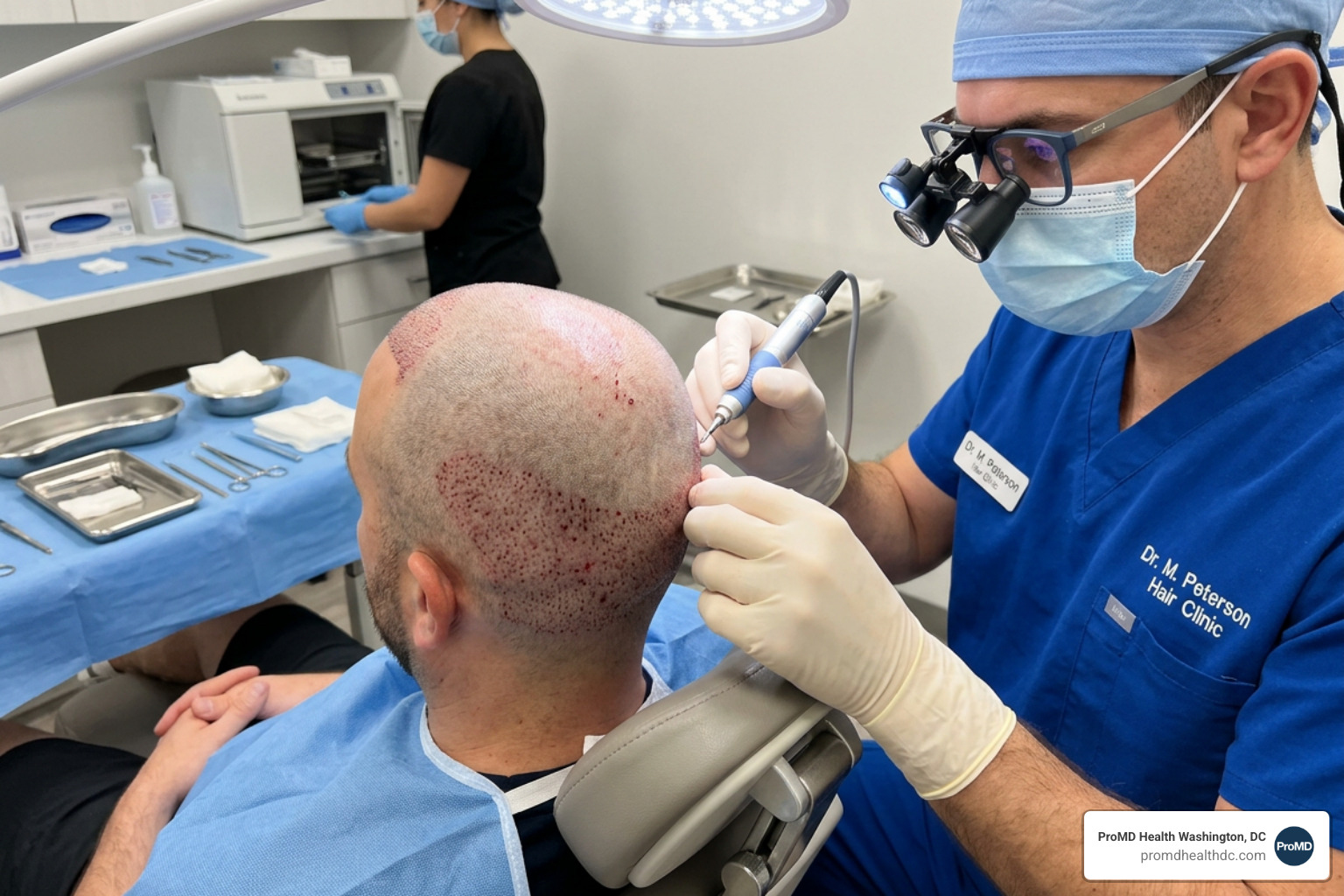
For a hair transplant, the procedure usually takes 5 to 8 hours. We use local anesthesia, so you’ll be awake but comfortable — many of our patients catch up on movies or podcasts during the session.
Recovery Milestones:
- Days 1-3: Some swelling and minor discomfort.
- Days 7-10: Scabs from the grafts begin to fall off.
- Months 1-2: The “Shock Loss” phase. The transplanted hairs will actually fall out. Don’t panic! This is a normal part of the cycle.
- Months 3-4: New, fine hairs begin to sprout.
- Months 6-9: Significant growth and thickening.
- One Year: Final results are visible.
Frequently Asked Questions about Hair Restoration for Men
How long does it take to see results from hair restoration?
Patience is key! For medications like Minoxidil, it takes about 6 months to see a difference. For a hair transplant, you’ll see the first signs of new growth around month 3 or 4, but the full “wow” factor doesn’t happen until the 12-month mark.
What is the typical cost of hair restoration procedures?
Cost varies wildly based on the technique and the number of grafts needed. Non-surgical therapies like PRP are more affordable per session but require maintenance. Surgical transplants are a larger upfront investment but offer a permanent result. During your consultation in Washington, DC, we provide a transparent breakdown of costs tailored to your goals.
Are there any risks or side effects associated with hair transplants?
Like any procedure, there are risks, though they are rare. Potential side effects include minor swelling, temporary numbness, or folliculitis (inflammation of the hair follicles). Choosing an experienced clinical team significantly reduces these risks.
Conclusion
Restoring your hair is about more than just vanity; it’s about feeling like yourself again. Whether you’re just starting to notice a receding hairline or you’ve been thinning for years, there is a solution that fits your lifestyle and your budget.
At ProMD Health Washington, DC, we specialize in creating personalized treatment plans that deliver natural, masculine results. One of our favorite tools is the Entity Med AI Simulator, which allows you to preview your personalized treatment results before you even start. It takes the guesswork out of the process and helps us align on the perfect hairline for your face.
If you’re ready to take the next step, we invite you to visit us at our Washington, DC office at 1003 K Street NW. You can find more info about hair restoration services and schedule your consultation today. Let’s get your hair back to where it belongs.
